Last Updated on April 28, 2026
How good are your PC troubleshooting skills?
Students face multiple difficulties when they study. Most of them are solved using their own strength and knowledge. Some of them are solved thanks to professional essay writing companies because they provide students with high-quality writing services online. But when students deal with technology and computers, in particular, they also face definite problems. Thus, Lauren Bradshaw, an academic writer from Customwritings.com would like to share some troubleshooting tips and tricks.
Many students associate their future life and career in computer science and technology. They go to technical colleges and universities to become professional programmers, engineers, online security experts, etc. Besides, almost all students have personal computers (PCs) or laptops. Accordingly, it’s important to have advanced technical skills.
Write Down the Whole Process
One of the easiest and most obvious tips is to keep the record of all the processes that failed. When you see that something doesn’t work several times in a row, you should write down every step you’ve done to complete some function. Perhaps you’ve been mistaken at a certain phase. This method helps to reevaluate your actions step by step and spot the mistake.
Take Notes about Error Messages
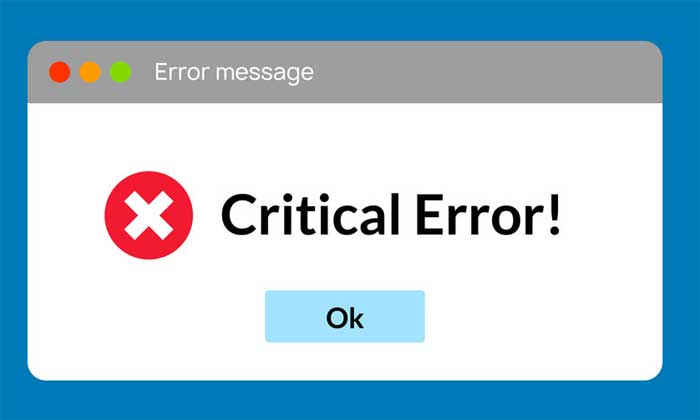
You should develop a habit of taking notes about the errors. Your operating system (OS) is smart and informs about the errors sending various messages that appear on the screen of your PC or laptop. Most users ignore them thinking that it’s ok and it won’t reappear or cause any harm. However, such messages may be a sign that the whole system may be collapsed. Therefore, register all such messages and analyze them. Perhaps you need to fix something to avoid the failure.
Check the Viruses
Sometimes the main problem appears because of a malicious program or virus. Accordingly, you ought to check your operating system on a regular basis with dependable anti-virus software. If your software is effective enough, you’ll surely spot the threat and will properly deal with it. Thus, you may solve the errors and protect your OS from being collapsed.
Today’s threats are less about “crashing” your system and more about Ransomware and Phishing. For a student, the biggest risk is a “Malicious Document” (like a fake PDF or Word doc) that looks like a study guide. Ensure your browser’s “Safe Browsing” is turned on and that you have Multi-Factor Authentication (MFA) enabled on your school accounts. Even the best antivirus can’t protect you if someone steals your login credentials via a fake login page. Therefore, a dependable safeguard with new databases will perfectly resist the newly created cyber threats.
Update Your Software
It’s of huge importance to stay up-to-date. We mean the software you use. We’ve already mentioned anti-virus software. However, you use other kinds to run all the functions quickly and smoothly. Sometimes your device thinks too slow and it may be a sign of out-of-date software. Make sure you check them all and renew them. It’s better to use the licensed software and their upgrades. Oftentimes, the non-authentic software isn’t efficient enough, contains some bugs and even malicious programs.
Resetting vs. Reinstalling
In the Windows 11 era, you don’t need to “wipe and start over” as a maintenance routine. Frequent reinstalls can actually put unnecessary wear on your SSD. Instead, use the “Reset this PC” feature and select “Keep my files.” This refreshes the Windows system files and removes buggy third-party software while leaving your term papers and projects exactly where you left them.
Test Online Connection
At times, people don’t notice that they cannot connect to the Internet because of one obvious issue. Their connection is missing. This is the simplest tip. Simply check whether your cables are properly plugged in. If they are alright, check the connection on your device. Perhaps you simply should simply restart it to make it work.
Use Hotkeys
Hotkeys are a student’s best friend for efficiency. Beyond Ctrl+Shift+T (reopening tabs) and Ctrl+Z (undo), try Windows Key + V. This opens your Clipboard History, allowing you to see the last 25 things you copied, not just the most recent one. Also, use Windows Key + Shift + S to quickly grab a screenshot of a specific part of your screen—perfect for grabbing a reference from a lecture slide or a textbook.
Another important combination is Ctrl+Z, which is very resourceful and helpful. Do you need proof? It can undo almost any previous action you’ve done. Thus, you can return the deleted or removed files. It helps in many possible situations. Don’t forget about Ctrl+Y. This combination can redo whatever you undid. Learn and memorize the possible hotkey combinations to quickly resolve some problems, undo the previous actions, and fulfill all the functions faster. It’s really very convenient!
Consider Fragmentation
Many users overload their PCs and laptops without knowing that. They stuff their devices with various programs and supporting files, which overcomplicate the whole system. Many of them look at some old programs and think: I’ll keep it because it may be useful one day. The truth is that they never use them again.
For students using modern laptops with SSDs, “fragmentation” isn’t the performance killer it used to be. Instead, the real bottleneck is “Background Processes.” Every program you install often adds a “startup item” that eats up your RAM. Instead of deleting every mystery file, open your Task Manager (Ctrl+Shift+Esc), go to the Startup apps tab, and disable anything you don’t need running 24/7. This “unloads” your system resources without the risk of deleting a critical system file.
When in Doubt, Clear the Cache
If a specific website for your school or a research database is acting glitchy, it’s rarely a system-wide computer problem. Usually, it’s just “stale” data in your browser. Before troubleshooting your hardware, try opening the site in an Incognito or Private window. If it works there, you just need to clear your browser’s cache and cookies to fix the issue.
Of course, our article couldn’t contain all the possible tips and tricks. We’ve given the most efficient ones, which are universal and suit any operating system and kind of a device. You may also require tips for a certain operating system. Surf the Internet and you’ll definitely find special websites, which provide smart troubleshooting tips and tricks for different operating systems. Thus, you’ll be armed with the necessary knowledge to overcome multiple problems even if you’re not a professional programmer.